POET'S CORNER
by Russell Bittner
Interview with Tom Riley
October is the month to be spooked. But our interviewee for this month of Halloween is neither a ghost nor a pumpkin head. He’s Tom Riley—in the words of Joe Salemi (our interviewee for June, 2009), “one of the best damned poets writing in the U.S. today. Richard Moore once said to me that ‘Tom Riley is incapable of writing a bad poem.’”
Who am I, I thought, to argue with the good Professor Joseph S. Salemi—never mind with Richard Moore? And so, I thumbed through my current and back issues of Trinacria (a poetry journal edited by Professor Salemi and privately published, printed and distributed out of Brooklyn, NY) and struck gold.
I read several of Tom’s poems in Trinacria, then sent him an invitation by e-mail. He responded within a couple of hours (we’re in the same time zone out here in sunny California, though in radically different micro-climates); and so, here we are. (By the way, I then took the time the next day to read his collection, “A Beautiful Lie” and was glad I did. In sum, I now understand how Richard Moore can say “Tom Riley is incapable of writing a bad poem.” Tom Riley could write s**t, and it wouldn’t smell. It might be reekingly witty, but it wouldn’t smell.
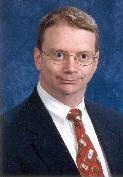
Nevertheless, as courtesy dictates, Tom gets a formal introduction by way of his bio:
RRB: Before we get into your poetry, Tom, tell me something: how is it you “exercise way too much for a man (your) age, (yet at the same time) enjoy (your) potation of whiskey?” And is the bow you shoot occasionally or exclusively aimed at your enemies?
TMR:I wish such things were legally possible and would be quite willing to accept return fire. In reality, I can’t even shoot my big-boy bow most of the time. I have to use a little 45-lb. target bow because my property has been annexed to the City of Napa. As for the exercise and the whiskey, I don’t see the contradiction. I sometimes work out and drink at the same time. We have to remember that beer was the original workout drink, concocted to extend the endurance of ancient field hands and construction workers.
RRB:Good answer, Tom! Anybody ever again gives me grief for how much I drink, I’m gonna use it. I sometimes wish states like CA and NY would show a more enlightened public policy and, rather than institute, say, “No Parking,” “No Standing” and “No Smoking” zones, would adopt “Drinkers Only,” “Falling Down Permitted” and “Up with Smokers!” zones. One thing I’ve always liked about Italy—quite apart from the women and the beautiful architecture, not to mention the beautiful architecture of those same women—is the government’s enlightened attitude towards human vice. Not only do Italians allow it, they seem to embrace it—from the top down.
And speaking of heroes, help me out with the title of your first piece. I may be flaunting my ignorance of comic books. If so, forgive me. As a kid, I always had my nose in the soft porn section of the local drugstore—so, no time for Superman or Batman. I wanted to be those guys, especially with the Lois Lanes of the world, and not just read about ‘em.
TMR:Yes, I’ve felt that way, too. I think everybody has. Of course, in the original story, Superman didn’t have time for Lois except when she needed rescuing. He was involved in a love triangle that forced him to compete with himself: as Clark Kent, he badly wanted Lois; as Superman, he could easily have Lois; but Superman didn’t want Lois and Lois only had eyes for Superman. The version of Batman I like best is too driven to have time for women: he lives only to avenge his murdered parents.
The title of that poem was going to be “D.C. Heroes as Competing Emblems of Unreality,” but I decided to shed an extraneous syllable after considering that the Superman myth was real insofar as it disproved the Batman myth and vice versa. The Superman myth is the myth of someone born greater than mortal nature and therefore intrinsically free from the human condition. The Batman myth is the myth of someone who, by a simple and awesome act of will, resolves to transcend ordinary humanity and the human condition. I believe the Batman myth to have been present in Stoicism—and I love almost all of its expressions. But I recognize it as a myth—i.e., it can never be realized.
The Superman and Batman myths are exact opposites, which is why a comic book universe that features both of them is complete. The sad beauty of the two contrary myths is that each is true only insofar as it refutes the other one. None of us is born greater than mortal nature and none of us can transcend mortal nature by trying. That’ll continue to be true even if the nightmare visions of some scientists are realized—if, for example, someone finds a cure for ageing. We’ll still want to age and want to die—or at least part of us will.
That’s what was behind my little Superman/Batman sonnet. By the way, when Superman and Batman fight each other in the comics, Batman almost always wins—by cheating. More power to him!
RRB:That, Tom, has to rate as the finest example of exegetical literature on either character I, at least, have ever read—and so, on to your Spenserian sonnet.
“D.C. Heroes as Competing Emblems of Reality”
We all know that we can’t be Superman.
Reality descends the day we know
We can’t be Batman, either. Yes, I can!
You say inside, so fast that thought is slow.
But someday you will know the truth — and go
Forward beneath its shadow, darker far
Than Batman’s. Still, if you would have it so,
Go on believing. Wish upon a star.
Train, train: lift weights and run, skip rope and spar.
Learn how to memorize those license plates.
Know every crook’s particular cigar
By sniffing. Pumped like hell, the mind inflates.
I’m praying hard for too-ambitious you.
If you can pull it off, then I can, too.
RRB:In your next piece, you’ve left the sonnet form behind for the equally (if not even more) challenging form of the villanelle. I’m just curious, Tom: did you start out this piece with the clear intention of writing a villanelle, or did it just evolve that way? Also, did Kipling’s poem “If” play any role in your thinking about “Be a Man?”
TMR:Usually lines occur to me and dictate, to some degree, the form of the poem. When I was in grad school and took a poetry workshop—ugh! —this procedure offended my professor and most of my classmates. Even then, I worked almost exclusively in fixed forms because I liked to have in my mind some past standard of excellence. What I did to get everybody off my case was to make up highly artificial forms and prosodies, then write short stories squeezed into those rules. It fooled the critics, but didn’t lead to any worthwhile poems.
I was of course thinking of Kipling—a “great verse writer,” as the snob T.S. Eliot called him to avoid recognizing him as a poet—when I wrote “Be a Man.” But I was thinking more immediately of the problems associated with parenthood. All of my kids are either stepchildren or adopted—and the three adopted ones are the ones I’ve had to provide with moral instruction. Two of these are boys, and I’ve had to give them what we can only call “manhood training.” There’s no way out: if you want to manage your responsibilities, you have to do it. But I’ve always had a sense of how ridiculous such discourse is: the father has to say something risible and the poor kid is likely to answer with something risible. I decided that every man says this sort of thing to himself—and reacts to it—all the time. That observation provided the two refrains, and the villanelle followed. I wanted to show that both sides in this endless dispute say absurd things and have to say those absurd things. Absurdity and necessity are what I wanted to communicate: as often happens, the fixed form provided a perfect framework for the ideas that governed the poem.
The “dad voice” in that poem generally sounds like that of a Stoic—the Stoics being my favorite brand of abstract philosopher and therefore of a certain absurdist dimension. In the selection, “Be a Man” is juxtaposed with the Batman myth for that reason.
“Be a Man”
He told his inner child to be a man.
His inner self responded with a whine:
“You say I should! It doesn’t mean I can!”
“When the sun’s hot as hell, boy, get a tan!
A stop sign shouts? Then nap—and bless that sign!”
He told his inner child to be a man.
“If you will only run the way I ran
And fight the way I fought, then you’ll be fine!”
“You say I should: it doesn’t mean I can!”
“Keep your soul and your body spic-and-span!
When fraeuleins say, Come here, joe, tell them nein!”
He told his inner child to be a man
Untouched by human weaknesses.“Just ban
The pesky things and soon you’ll feel divine!”
“You say I should. It doesn’t mean I can.
Of fantasy ideals I’m not a fan.
My elements refuse to get in line.”
He told his inner child to be a man.
“You say I should! It doesn’t mean I can!”
RRB:And yet now, we’re back to the Spenserian sonnet form we recently visited. You’ve treated a “noble” subject with wit and verve. Are you “having us on” with this one, as some of my more Anglophile friends would say? Oh, and by the way, are you well enough versed in Old English to teach it?
TMR:I’d need to brush up to teach Old English in a systematic fashion, but the foundation is there. I studied under the late Lewis Nicholson of the University of Notre Dame. I still know the Beowulf well.
I’m not having the reader on in this poem—though I am trying for wit in expressing something I really think about Beowulf: that he took up evil’s weapons in the underworld and thus undermined his mission. Remember that he took Grendel on barehanded. Beowulf’s taking up the giant-made sword was like Aragorn taking and using the Ring.
"Live By the Sword"
“Geseah tha on searwum sigeeadig bill,
Ealdsweord eotenisc ecgum thyhtig,
Wigena weorthmynd….”
—Beowulf, 1557-1559
Beowulf into hell hath dared to dive—
Where Grendel’s hellish mother waits in wrath.
Deep in the realm of death, lad, look alive!
Do right, although you’re on the leftward path!
One against one? You think you’ve done the math?
Beloved Beowulf, you’ve done it wrong.
When you’re immersed there in that hellish bath,
The partisans of death are doubly strong.
You’re sentenced now to dwell your whole life long
Among the monsters that you think you slay.
Though you be victor in the minstrel’s song,
Apparent victory will pass away.
You’ve won a treasure you cannot afford.
Tested in depths, you used the wrong damn sword.
RRB:I must confess, Tom, that my one and only reading of Beowulf (and in Middle English, as I recall, so hardly the challenge you faced at Notre Dame) goes back forty years. I haven’t been moved to purchase a copy of Seamus Heaney’s more recent translation, but I suspect it’s well worth the price of admission.
With “Little Fingers,” you’re once again back to the villanelle form. Can you please tell us something about it?
TMR:It’s a comment on the Marxist theory of value—which is always quoted to me by people who profess to hate Marxism. “I worked my fingers to the bone….” It’s supposed to prove that the speaker has done something valuable—but of course it proves no such thing. The specific occasion had to do with my classroom—which I’d made arrangements to re-decorate, at my own expense, as the Batcave. A mindless administrator intervened and had it turned into Romper Room instead. The defense was that the Romper Room decorators had “worked their fingers to the bone.” My students were so disappointed they were ready to weep.
Seamus Heaney’s translation of Beowulf is brilliant—especially as it’s so Irish.
“Little Fingers”
They worked their little fingers to the bone.
The sweat poured off their faces, made a lake.
The value of the product stayed unknown.
“In industry, let man not be alone!”
The god of labor made his first mistake.
They worked their little fingers to the bone.
They hammered at a vast, unyielding stone.
Their shoulders melted, one gigantic ache.
The value of the product stayed unknown.
They modified their attitude and tone.
They made their very agitation shake.
They worked their little fingers to the bone.
They told their pain that they were in the zone.
They made such noises as the hopeful make.
The value of the product stayed unknown.
Self-sacrifice we do not quite condone—
But we accept it for our selfish sake.
They worked their little fingers to the bone.
The value of the product stayed unknown.
RRB:“…especially as it’s so Irish.” Is that your Irish-American wit or bile seeping through? (Smiley face here.)
Okay, it’s a little late in the evening to start dicing up Marx’s “theory of value” (especially since this German-American read it in the original as “theory of surplus value—viz., Mehrwertstheorie,” but that’s just a detail). And as for the fact that Seamus Heaney is Irish and not English— if you’re thereby suggesting he wouldn’t be able to effectively translate the epic work of the English language—I’m reminded of a time when I was working just outside of London…a Kiwi colleague and I were debating a certain grammatical point…and a third (Brit) colleague piped in with “I always find it so amusing when colonials debate our language.” I won’t tell you what thoughts went through my mind at that instant—but only because this is a public-access site. Let me assure you, however, that my they didn’t bend towards the charitable.
I’ve never felt that one had to be a native speaker—never mind British—to have a rather good grasp of the language. But since I haven’t read the work in question, I’m in no position to comment one way or the other on the quality of Seamus Heaney’s translation.
Let’s instead return to something more firmly within at least my grasp—namely, your poetry.
“Two Babes”; “Lake Serpent”; “Homo Troglodytes”; and “The Book of False Virtue” are all short pieces. In my book of real virtue, ‘short’ doesn’t necessarily translate into ‘bad’ or ‘trivial’ or even ‘lite’ (as so many poetry editors seem to think).
Tell us something about them if you will.
TMR:In praising Seamus Heaney’s translation of the Beowulf, I didn’t mean to condescend to Heaney. I meant to suggest that the Irish have always outdone the English at their own language. Richard Moore once said that I outdid Spenser at the Spenserian sonnet. It’s true—and it’s because I’m an Irishman. In fact, I’m so Irish that I scare the Irish.
I love short forms and work hard at them. I won’t comment extensively on these examples, letting them speak for themselves—except to say that “Homo Troglodytes” addresses the controversy between Darwinist and “Creationist” in terms that should satisfy neither. I don’t at all mind being related to chimpanzees—and only note my deficiencies of physique as compared to the mighty chimp. Also, a chimp can drink any man under the table. God created them that way to teach human creatures humility. But does anyone pay attention?
RRB:Tom, I knew I was beginning to enjoy this interview once I’d gotten to the point of provoking you to say “F**k you, Herr Bittner—as well as the Trojan horse you rode in on. I happen to agree with Richard Moore, by the way. But let’s not too quickly dismiss Edmund Spenser. He was, after all, writing for a different age—a more forgiving age. And I dare say he got a lot more sn**ch than either of us with his sonnets.
I, for one, pay attention to chimps—and would never have one as a pet or allow my kiddoes to have one. They’re brutal. More brutal, even, than the Irish on a bad day—if that’s possible.
Speaking of which, let’s please have the poet’s poetic take on “Two Babes”—since you either intentionally or unintentionally ignored my last request to wrap it along with “Lake Serpent”; “Homo Troglodytes”; and “The Book of False Virtue” into one general observation on your talent as a Spenserian sonneteer and Super Bowl poet.
TMR:I know about how tough and mean a chimp can be. But I admire tough, mean things as long as they’re behind bars.
In “Two Babes,” I was trying to do something similar to “Be a Man.” I was trying to address a matter of necessity. I characterized the two options regarding final things as two girls fascinating a single speaker. Inevitably, the speaker cannot choose and ends up as lost between contraries as he was at the beginning. I think the poem should be judged according to how well the two girls reflect the two options. Does despair have raven hair? Does peace have big boobs? Spenser loved contraries and, I think, would’ve approved this effort in his sonnet form.
And, since you really are interested, “Lake Serpent” derives from an episode of The X Files. “The Book of False Virtue” is an obvious shot at the still-more-obviously-depraved scam of Bill Bennett in republishing old classics as some kind of new insight into the moral universe. It’s a cheap poem but must be satisfying to someone who agrees with my evaluation of The Book of Virtue.
“Two Babes”
I flirted first with Ultimate Despair.
I flirted afterward with Inner Peace.
Despair had lots of long, rich, raven hair.
Peace had a pair of boobs that wouldn’t cease
Impressing. Both ignored the verbal grease
That I laid down—but neither seemed to be
Standoffish. Buddy: you don’t need to lease!
They seemed to say. The experts all agree
That you can own! The possibility
On either side was more than mere temptation.
I was prepared to fall on bended knee.
I was prepared to opt for osculation.
But, torn between the two of them, and hurting,
I couldn’t fix on one—and went on flirting.
“Lake Serpent”
The legendary serpent of the lake
Offers no fruit, sir, to the likes of you!
Though for temptation you may truly ache,
The legendary serpent of the lake
Regards your presence as a mere mistake,
A meaningless obstruction of his view.
The legendary serpent of the lake
Offers no fruit, sir, to the likes of you.
“Homo Troglodytes”
Linnaeus classified the chimpanzee as a member of the human genus.
“Though you think me a mere chimpanzee,
Karl von Linné would surely agree
We were closely related.
You are far from elated?
Hey, don’t think the truth’s thrilling to me!”
“The Book of False Virtue”
"Virtue! Virtue's the thing I adore.
I find vice an unbearable bore.
I find doubts to be crap.
All that stuff's a damn trap...."
"So I've heard now from many a whore."
RRB:Tom, you’ve rendered me speechless. I’ll never pretend to write another poem again. I mean, why bother? Just as Time Magazine once announced the death of God, you’ve announced—through your verse—the end of poetry as we know it. What can possibly follow?
That said, I see that we’ve run way outside of our little “Poet’s Corner” tonight, but I’ll allow you to run on a bit longer only because you’re so damned good! Readers who choose to stay on get extra credit and can come late to—or even skip—class tomorrow.
So let us know what you were up to with this series of fourteen sonnets—which has an end-rhyme scheme to end all end-rhyme schemes—and then we’ll say “Goodnight.”
TMR:Well, I’d attempted sestinas before—and perhaps succeeded in a couple. I wondered whether the governing principle of the sestina—the use of end words rather than rhymes—could be applied without the disturbing, obsessive quality one always finds in a sestina. So I devised a sort of sonnet plan that would make use of that principle. It ended up becoming more obsessive than I’d anticipated, but I still liked it.
At the same time, I was studying Italo Calvino’s Invisible Cities—and actually writing some “cities” of my own, in prose. I liked the hard little kernel of universal truth hidden in each of those exercises in eccentricity. And I tried to do the same thing in “Sideshow”—each sideshow freak, even the horse or the pig, speaking for all of humanity when most involved in his own peculiarity. I organized the whole to resemble a crown of sonnets. A lot of people over the years—even Richard Moore—have communicated to me their admiration of these pieces. So I guess the experiment worked out as well as I could expect.
1. “Two-Headed Man”
Actually, we believe that our effect
on those poor souls who come to see us is
more edifying than the tripe they get
on TV, educational or not.
Through our association we beget
in them a sense of brotherhood, effect
a change in lonely psyches that are not
aware how deep their isolation is.
Of course, we don’t suppose their single heads
accept at once such elevating thoughts.
We feel the wrappers that they throw at us.
But we have faith that all are separate heads
on a great friendly body — just like us —
and that the body thinks enlightened thoughts.
2. “Living Skeleton”
You beefy people always gawk at me
as if I were the freak, but I don’t feel
that way. It seems to me that good, strong bones
make for a good, strong man — that muscles are
intended principally to shore up bones.
And mine stand up quite well. Just look at me.
Behold how graceful all my movements are.
Can’t you perceive how wonderful I feel?
But you, you carry all that extra flesh
wherever you go — a burden, I should think,
a man would gladly give his life to shed.
Recall it was the too, too solid flesh,
not the fine bones, that Hamlet longed to shed,
and you’ll begin to think the way I think.
3. “Fat Lady”
I offer no excuses. All my glands
are normal — or they were before I made
the only wise decision of my life
and started my professional career.
I was fifteen when I determined life
was far too valuable to waste on glands
that lusted after skinny boys. Career
advancement was my goal. I am self-made.
To tell the truth, I do not like to eat
at all, but it’s a sacrifice I have
to make, like any athlete. Would you like
to join me now that it is time to eat
again? I welcome guests. I do not like
to think my work is all the life I have.
4. “Mathematical Horse”
I tire of yokels asking me to count
out answers to their empty-headed sums
with hesitant hoof. (They’re never satisfied
unless I hesitate the way they do
when using their brains.) I’m barely satisfied,
in fact, with full professors who recount
at needless length how they themselves would do
their dull Boolean proofs or zero-sums.
I, who was contemplating hyperspace
while at my mother’s teat, am not the type
to savor this ridiculous routine
I’m forced to, being trapped in time and space.
If I could publish just the most routine
of my ideas....But I can’t even type.
5. “India Rubber Man”
Call me up any time. I’m flexible.
Hey, hey, folks! Do you like my monologue?
When young, I always dreamed of growing up
to be a stand-up comic—but I found
I had a lot of trouble standing up.
Hey, hey! Well, failures must be flexible,
enjoying such success as can be found
in making life itself a monologue.
But I don’t want to get you people down —
except that little lady there. Hey, hey!
For all I know, you too have uttered sighs
on seeing fond ambitions tumble down.
Well, take your cue from me. I’m done with sighs.
I can bounce back from anything. Hey, hey!
6. “Giant”
I like to think the world is growing up
at last. I like to think that, someday soon,
pretty much everyone will be my size,
and that new movie-houses will be built
for us. I like to think I’ll get to size
up girls who in their turn will size me up
without sheer terror at the way I’m built.
I like to think I’ll see these changes soon.
Improbable, you say? You’re not the first
of my petite acquaintances to think
it was his duty to discourage me.
Such carping really got to me at first,
but now I never let it bother me.
I think exactly what I like to think.
7. “Human Pincushion”
It doesn’t hurt. It’s just like acupuncture,
except it isn’t accurate. I feel
a kind of pleasant tickle when they first
slide a new needle in, but that’s soon gone.
During my placid youth, I felt at first
that my sedate reaction to a puncture
was normal, and that feeling’s not quite gone:
I still can’t figure out what others feel.
What makes them hoot and holler so? I guess
I’ll never know. Although I’m sensitive
to language, people just can’t seem to say
what pain is like, and I can’t seem to guess.
A shame, but nonetheless, I’d like to say
it’s not so bad being insensitive.
8. “Wild Man”
The chains don’t really bother me. I feel
they give my gestures an impressive weight.
An ordinary man in chains becomes
a spectacle—so how much more so, I?
I’m not offended when the tame crowd comes
to pay its tame respects. I always find
something quite entertaining in what I
regard as its essential lack of weight.
What bothers me, what makes me truly wild,
is the long loneliness. I’ve heard enough
about how different women are today:
athletic, fiercely independent, wild—
all lies. I know. Watching them day by day,
I’ve never seen a woman wild enough.
9. “Musical Pig”
My one regret is that my mom and dad
never appreciated what their son
could do. Their quick, but far-from-silken ears
just weren’t attuned to music such as mine.
I still recall with terror how my ears
were tortured by that country stuff that Dad
would listen to, saying, “No kid of mine
is going to play that long-haired music, son.”
But that’s all over now. Lord bless them both,
they’re gone. I travel with a different crowd,
and all the critics love me. But I’d give
up rave reviews and worldwide travel both
for compliments two pigs alone could give,
sweeter than the applause of any crowd.
10. “Geek”
It makes me smile inside to see that look
of mingled satisfaction and disgust—
familiar to me from my decades in
this business—light the mugs of upright folks
when I pick up a chicken and sink in
my teeth: they fight to get a better look
then go home grinning, sure they’re just plain folks,
content with their vicarious disgust.
I take mine straight. Oh, yes, I feel it, too.
Who wouldn’t? But I know there is a point
to doing it, so I go through with it:
I show them, who bite into chickens, too,
just what they are, although they launder it
of its essential nature. Get my point?
11. “Bearded Lady”
When I was just a girl, I used to shave
each morning, and I got my share of dates.
When boys that age feel whiskers on their cheeks,
they think, with pride, the whiskers are their own.
But when I grew to womanhood, my cheeks
waxed heavy with their fruit. I couldn’t shave
often enough, and soon I had to own
up to the fact that joys all have their dates.
I shed no tears. I only learned in youth
what others are condemned to learn in age.
And now I have the time to cultivate
my beard—the sort that every downy youth
would love to have a chance to cultivate,
though not on me.(Come on, girl. Act your age.)
12. “Talking Dog”
That’s not polite. Would I call you a trick
if you ran after cars or wet the bark
on neighborhood trees? And how do you suppose,
Mr. Superior, this trick is done
if not by me? What pinhead would suppose
that my poor owner here could stage a trick
so far beyond the best he’s ever done?
Why, he can’t even give a decent bark.
So that convinces you? Well, pull my tail!
Who cares what you believe? I’d like to hang
your whole two-legged race for teaching me
its speech. When I go out now, chasing tail,
the bitches know I’m strange and bolt from me
to romp with handsome dogs whose tongues just hang.
13. “Human Magnet”
There isn’t anything remarkable
in what I do—or rather, what I am.
Oh, to be sure, in me a common power
is magnified to do uncommon things.
But everyone possesses that same power
deep in his bones. It is remarkable
to my mind that you all can’t do the things
which make me seem more freakish than I am.
You’ve seen how iron filings act around
an ordinary magnet. Don’t your friends
and enemies react the same to you,
attracted and repelled? Just look around
and see the pattern that envelops you.
We’re not so very different. Let’s be friends.
14. “Dog-Faced Boy”
Keep your fat fingers, thick with butter from
your popcorn, off my nose. It’s cold enough,
I guarantee you, and its sense of smell
is far too penetrating for my taste.
I can’t avoid you idiots. I smell
you even in my sleep. You yank me from
my deepest reveries with your poor taste
and raucous voices. I have had enough.
Nevertheless, I stay. I do not know
exactly why. That great and famous men
had canine faces all through history
just doesn’t move me. “Stick to what you know,”
I tell myself. “To hell with history.
Your field of expertise is ape-faced men.”
Published in Plains Poetry Journal
RRB:Indeed it did, Tom. I’d have to agree with Richard Moore. This “crown,” as you call it, is a masterstroke.
And with that, I’ll say thanks to you and to our readers. It’s been an enormous pleasure!